Abbey Church of Averbode

Hoogaltaar abdijkerk van Averbode
An intricately carved Baroque altar featuring statues of angels and religious figures in white and gold. The central painting depicts a biblical scene.


Looking for artistic reflection surrounded by nature? The wooded surroundings of the Merode and Hageland regions will lead you to the Abbey Church of Averbode in all its architectural splendour.

Abbey Church of Averbode

Averbode Abbey is a unique historical site. A Premonstratensian community has been based here since 1134. The forecourt is truly impressive and the reflections on the pond provide an opportunity for spectacular photographs when the sun is out. The abbey church, an ideal location for reflection, offers an unusual synthesis of Baroque and Gothic styles. The author Ernest Claes has his final resting place in the beautiful abbey cemetery.

Altar Dedicated to Saint Norbert

On 13 July 1700 the sculptor Pieter Scheemaeckers entered into an agreement with the abbot of Averbode, who commissioned an altar dedicated to Saint Norbert - the founder of the Order of Prémontre, which the community of Averbode Abbey is part of. Every feature of the altar had to be linked to the life and spirituality of Norbert and the order. The painting by Jan Erasmus Quellinus is suspended in the middle between the spiral columns: Saint Augustine passes on the order rule to Norbert.

The Averbode Altarpiece

History sources tell of a great fire caused by lightning which heavily damaged the abbey church on 25 October 1499. Once the church was rebuilt, the Averbode Altarpiece claimed its rightful place on the altar in 1514. Then it moved to the Norbertine (White Canons) refuge in Diest in the 17th century, and returned to the Abbey of Averbode in 1834 to be bought by the Antwerp Museum of Antiquities 40 years later. There it would stay put for the next 49 years until it returned to the abbey in 2023.

The spectacular altarpiece is really a team job rather than the work of one single person. A carpenter was responsible for the cabinet, a wood carver for making the figures, a painter for polychroming the figures and creating the scenes on the shutters. The carver, Jacob van Cothem in this case, would have been the most important artist working on a piece like this.

The sculpted scenes show the Lamentation of Christ and depict Christ at the top, in Limbo. The shutters were painted with oil and depict The Crucifixion and The Resurrection. When closed, the altarpiece shows us an Ecce Homo and The Encounter of Jesus and Veronica. The altarpiece shows elements of both the Early Netherlandish masters and the Renaissance. Its colourful scenes combined with their elegant figures against the lively backgrounds are a real feast for the eyes.

Carved wooden relief depicting a biblical scene. Figures in robes gather solemnly around a central figure lying down. Intricate Gothic details adorn the frame.
A detailed triptych featuring a central carved scene of a biblical group mourning, with painted side panels depicting religious events, evoking solemn reverence.

Practical information

Address

Abdijstraat 1
3271 Averbode
Belgium
View directions

Opening hours

  • Open Monday to Friday from 08.00 to 11.30 hrs and from 14.00 to 17.30 hrs.

  • Open Saturday and Sunday 08.00 to 11.30 hrs and from 14.00 to 17.30 hrs.
     

Accessibility

  • Easy access for people with disabilities.

More information

Good to know

  • Admission: free 

Master Tour Theodoor van Loon

Follow in the footsteps of the legendary Flemish Masters. The Master Tours take you to extraordinary places in Flanders’ cities and towns, all connected by one story.
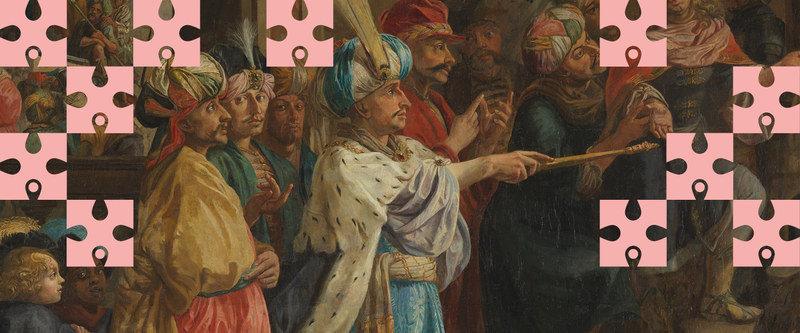
A classical painting depicts several people in period clothing, engaging in intense discussion. Overlaid are large pink puzzle pieces, partially obscuring the scene.

Other sites nearby

A grand, ornate cathedral interior with high arches, stained glass, intricate statues, and gilded altar. Two people sit on wooden pews, evoking a serene atmosphere.
Explore Diest and be charmed by exceptional masterpieces. Continue on to the St Sulpicius Church on the Grote Markt, in search of the Madonna of Diest.