Museum Saint John’s Hospital

Hans Memling


The Museum Saint John’s Hospital and Hans Memling are inextricably connected. Nowhere in the world are so many works by Memling to be found in their original locations. Bruges is always worth a visit, and that should definitely include a peek inside the Museum Saint John’s Hospital.

A detailed triptych painting depicting religious scenes. The central panel shows a serene Virgin Mary with saints. Side panels illustrate biblical narratives in vivid colors and rich detail.

Saint John’s Hospital

Saint John’s Hospital is one of the oldest preserved hospitals in Europe. It has welcomed the sick and needy since the 12th century and its medieval building now houses the hospital museum. The collection tells us the story of the hospital and includes paintings, sculptures, books, everyday items, medical supplies and a fully equipped 17th-century pharmacy. A new set-up with contemporary art focuses on the topic of universal care. The four paintings by Hans Memling (1430-1494), which were commissioned by the sisters and friars of the hospital and can still be admired in their original location after more than 500 years, are unique. In addition, the collection includes another three paintings by Memling, which makes this the second largest collection of his work.

Triptych of Saint John the Baptist and Saint John the Evangelist (1479) - Hans Memling

Memling’s Triptych of Saint John the Baptist and Saint John the Evangelist from 1479 is a monumental altarpiece made for the church of Saint John’s Hospital. The sisters and friars who managed the hospital are depicted as the patrons on the outside of the triptych: Antheunis Seghers, Jacob de Ceuninck, Agnes Casembrood and Clara van Hulsen. The altarpiece is dedicated to the patron saints of the hospital Saint John the Baptist with the lamb and Saint John the Evangelist with the chalice. They also determined the depiction and composition of the triptych when it was opened. A striking detail in the centre panel is the wooden crane to lift wine barrels off the ship. The tolls to be paid for this were charged by the hospital. 

An ornate, gold reliquary shaped like a miniature cathedral, features gothic architecture and intricate religious paintings on its panels. Elegant and historical.
Gothic-style gilded reliquary with intricate details, arches, and painted panels depicting religious scenes. Emotions of reverence and grandeur.

Relic shrine of Saint Ursula (1482-1489) - Hans Memling

The Shrine of Saint Ursula is a real attraction thanks to its three-dimensional nature. It is Hans Memling in architectural guise, a completely unique work in the oeuvre of the painter and a rarity in Early Netherlandish art. It was commissioned for Saint John’s Hospital by Agnes Casembrood and her sister Elisabeth, Jacob de Ceuninc and Jan Floreins as a replacement for an older, smaller shrine used to store relics of various saints, including those of Saint Ursula. The shrine was solemnly consecrated on Saint Ursula’s day, 21 October, of 1489, in the choir of the hospital chapel. The shrine is really a Gesamtkunstwerk for which someone designed the miniature chapel, a carver carried out the plans and Memling and his assistants made it into something really incomparable. Six scenes under rounded arches tell the story of Saint Ursula travelling along the Rhine river to the eternal city of Rome. 

Triptych of the Adoration of the Magi (1479) - Hans Memling

This triptych was commissioned from Hans Memling in 1479 by Jan Floreins, also known as Van der Rijst. He had entered the community of friars at the hospital around 1471 and would stay until he died in 1504. Between 1488 and 1497, he was even appointed as master. On the centre panel of the triptych, he is depicted kneeling in his black habit behind the wall. The triptych shows three crucial events in Christ's youth: His birth, the Adoration of the Magi and His Presentation at the Temple. The level of care in this smaller work betrays Memling’s urge to prove himself: wooden beams, brick buildings, carefully positioned figures, a street view with a city gate, men on horseback and a black man with a turban riding a dromedary... The signature and date on the frame are rare for Memling.

A three-panel altarpiece depicts religious scenes: the Nativity, Adoration of the Magi, and a Presentation. Rich colors and serene expressions convey reverence.

The Lamentation of Christ (1480) - Hans Memling

On the left, we recognise a kneeling Adriaen Reins, friar at Saint John’s Hospital and the patron who commissioned the work from Hans Memling in 1480. We know this because the latter dated the triptych and painted Reins’s initials on the frame. Mary, Saint John the Evangelist and Mary Magdalene lament Christ’s lifeless body. Quite literally, as we see the tears rolling down their cheeks from their red eyes. A disconsolate John is lifting the crown of thorns off Jesus’s head. The centre of the painting depicts the body of Christ lying in the lap of His apostle and mother. The right panel shows us Saint Barbara. And the outside depicts two more women saints: Saint Uncumber (Saint Wilgefortis) on the left and Saint Mary of Egypt on the right.

A triptych depicting a somber scene with figures lamenting over a lifeless, partially clothed body in the center. Side panels show standing people in solemn poses.

Practical information

Address

Mariastraat 38
8000 Brugge
Belgium
View directions

Opening times

  • From Tuesday to Sunday from 9:30 am until 5 pm.


Disabled access

  • Is partially accessible.

More information


Nice to know

  • Admission: €15.00 for standard tickets

Master Tour Bruges

Follow in the footsteps of the legendary Flemish Masters. The Master Tours take you to extraordinary places in Flanders’ cities and towns, all connected by one story.
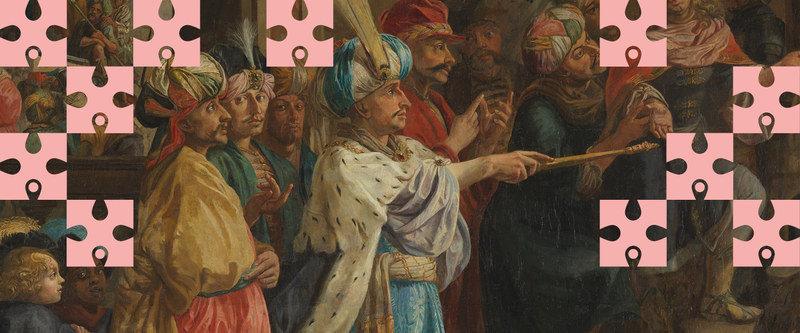
A classical painting depicts several people in period clothing, engaging in intense discussion. Overlaid are large pink puzzle pieces, partially obscuring the scene.

Other sites nearby

Interior of a cathedral with two people observing an altar featuring a large crucifixion painting. Surrounding stained glass windows add colorful light.
Once visitors step inside the church, they can explore the rich art collection.
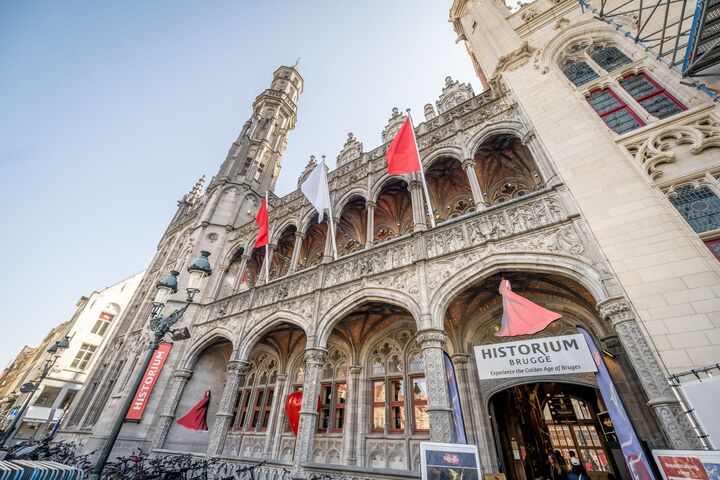
Gothic-style building with arches and ornate details, flying red flags, housing the Historium Bruges. Clear sky enhances the historic and grand atmosphere.
Step inside Historium Brugge and experience a unique journey through the glory days of the medieval city.
A circular stone relief depicts a person with curly hair, wearing a detailed garment, surrounded by a decorative frame. The expression is neutral and serene.
The magnificent Bladelin Court houses several works of art associated with the rich history of the City Palace.