Emile Van Dorenmuseum

House of Landscape and Art

Pastoral landscape with grazing cows near a pond, a church steeple in the background. Overcast sky conveys a serene, tranquil rural setting.

Henri Decleenestraat 21, Genk

Genk used to be a true painter's village. At the end of the 19th century the most prominent Belgian landscape painters and landscape painters from far beyond descended on Genk to capture the desolate landscape. You can still discover these special locations today.

A serene landscape painting depicts a marshy field with patches of water and distant trees under a soft, cloudy sky, evoking a calm, peaceful tone.

Emile Van Dorenmuseum

The Emile Van Dorenmuseum is based in villa Le Coin Perdu, the former home and studio of the landscape painter Emile Van Doren. The house was designed by the architect Adrien Blomme. The original furniture, ornaments and numerous paintings have been preserved within their original context. The Emile Van Doren Museum is a living museum, not only looking back to the past but also developing current and contemporary activities. 

Flowering Sweet Gale - Emile Van Doren (1865-1949)

Born in 1865, Emile Van Doren grew up in Brussels, not far from the Onze-Lieve-Vrouw-Ter-Kapellekerk (Church of Our Lady of the Chapel). He first beheld the beauty of the Kempen landscape in 1890, following a visit to Genk, which was favoured by artists because of its particularly picturesque landscape. Van Doren even maintained that Genk was made for painting, a statement that would define the rest of his life. He moved to Genk where he met his wife, Cidonie Raikem. Totally fascinated by the beautiful landscape, it is always the focal point of his oeuvre. The Flowering Sweet Gale also came about because of this. The rich colour palette combined with the distinct painting technique, shows the agility of the elements.

Portrait of a man with short brown hair in formal attire, featuring a gray jacket and white shirt against a muted background. The expression is contemplative.
Oval portrait of a woman with short gray hair, wearing a lavender blouse and white shawl, conveying elegance and warmth, set against a dark background.

Portrait of Emile Van Doren - Herman Richir (1866-1942)

Herman Richir’s refined portrait art can also be admired in the Emile Van Doren Museum. Two of his portraits are on display in the villa Le Coin Perdu, including the portrait of Emile Van Doren. It is no coincidence that this is part of the Emile Van Doren Museum as they were good friends. Richir often visited the family in Genk and stayed there to paint the Kempen landscape. Yet his focus was primarily on painting portraits, still lifes, genre pieces, nudes and decorative items.

Portrait of Cidonie Raikem - Herman Richir (1866-1942)

Cidonie Raikem was an innkeeper in the Statiestraat in Genk. In 1898 she married Emile Van Doren and together they converted the inn into a Hôtel des Artistes (Artists’ Hotel), which was a meeting place where creativity was given free rein. Artists, writers and tourists came from near and far to stay there.

A serene landscape painting depicts a marsh with grassy fields, scattered water patches, and distant buildings under a cloudy sky, evoking a calm, contemplative mood.

View of the mill pond - Joseph Coosemans

This painting by Joseph Coosemans shows the marshy landscape around the Molenvijver (mill pond) in 1891. The Kempen village of Genk and the often painted spire of Saint Martin's church are visible in the background. Just a stone’s throw from the museum, you can still recognize the location today.

Practical information

Address

Henri Decleenestraat 21
3600 Genk
Belgium
View directions

Opening hours

  • Open Wednesday to Sunday from 13.30 to 17.30 hrs.

Accessibility

  • Partially accessible to people with disabilities.

More information

Good to know

  • Admission: free

Other sites nearby

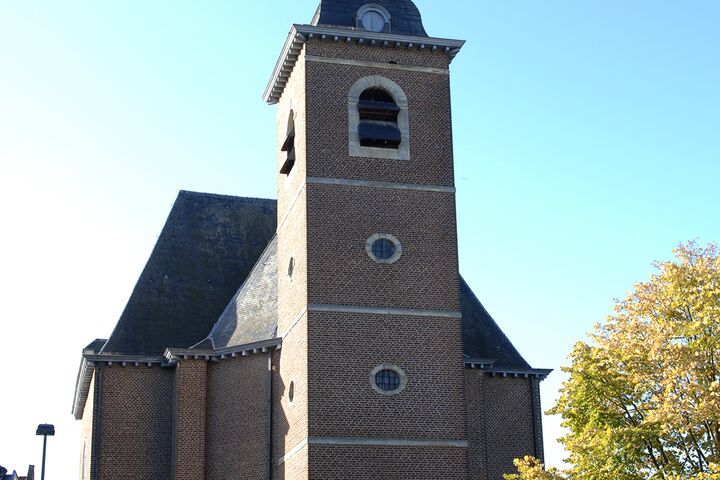
A tall brick church with a bell tower and clock under a clear blue sky. Sunlit tree on the right. Peaceful and historic atmosphere.
The Museum Church of Oud-Rekem is definitely worth a visit! It's home to the reliquary shrine of Saint Petronilla.